The Journey of Microplastics: From Your Kitchen to Your Body
The Journey of Microplastics: From Your Kitchen to Your Body
You try to live clean. You eat your greens, you filter your water, and you avoid obvious junk food. But what if the most persistent environmental and health threat is hiding in plain sight, right on your kitchen counter?
We are talking about everyday plastics—specifically plastic cling film and conventional plastic sponges. The journey these items take—from the moment we use them to the moment they come back into our lives—is a cycle we need to understand.
1. The Hidden Sources in Your Kitchen
Microplastics (fragments smaller than 5 millimeters) are shed from common kitchen items every single day.
<strong>Plastic Cling Film:</strong> When you cover a warm bowl of soup or wrap a block of fatty cheese, the heat and fats begin to break down the plastic at a microscopic level. Tiny particles can flake off directly onto your food.
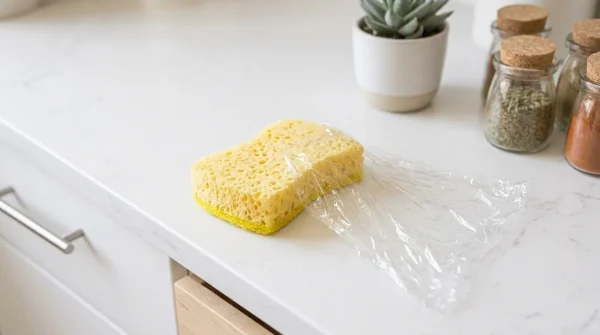
<strong>Plastic Dish Sponges:</strong> Conventional sponges are often made from polyurethane. Every time you scrub a hot pan, the sponge degrades, shedding thousands of microplastic fibers.
2. The Path to the Ocean (How We Process Them)
When you toss a plastic sponge or rinse your sink after washing dishes, those microplastics don’t just disappear. They wash down the drain and enter our municipal water systems.
Because wastewater treatment plants are not designed to filter out such microscopic particles, a vast amount of these plastics bypass the filters and flow directly into rivers, lakes, and oceans. It is estimated that a single plastic sponge can release tens of thousands of microplastic fibers over its lifetime, all heading straight for our waterways.
3. The Return Journey: Back to Your Plate
Here is where the cycle becomes deeply personal. Once in the ocean, these microplastics are mistaken for food by plankton, fish, and larger marine life. They accumulate in the digestive tracts and tissues of seafood.
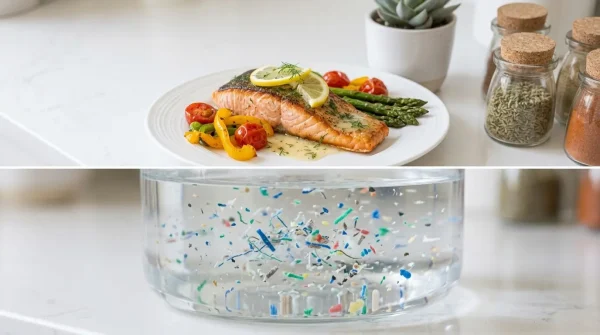
When we sit down to eat a seafood dinner, we are often unknowingly consuming the very microplastics that washed down our kitchen sinks months or years earlier. Furthermore, these microscopic particles have now been detected in bottled water, tap water, and even in human blood and placental tissue.
The plastic we use for 10 minutes in our kitchen is coming back to us on our dinner plates.
4. Breaking the Cycle at the Source
We cannot filter our way out of this problem. The only true solution is to stop the microplastics at the source—our homes.
By making simple, intentional swaps in our kitchens, we can break this toxic cycle:
• Swap plastic cling film for <strong>reusable beeswax wraps</strong>. They are made of natural cotton and beeswax, meaning zero microplastic shedding.
• Swap conventional polyurethane sponges for <strong>natural, compostable loofahs</strong>. They scrub just as effectively but return to the earth naturally without leaving a plastic footprint.
Small changes in your kitchen don’t just protect the planet; they protect your body and your family’s future.