
The Magic of Loofah: Nature’s Original Sponge
The Magic of Loofah: Nature’s Original Sponge
Take a moment to look at the sponge sitting next to your kitchen sink. If it’s bright yellow, wrapped in plastic, or made of synthetic foam, it has a secret. Most conventional sponges are made from polyurethane—a petroleum-based plastic. Every time you scrub a hot pan, that sponge sheds microscopic plastic fibers straight down your drain.
Now, imagine a sponge that doesn’t pollute the ocean. A sponge that actually grows on a vine under the sun.
Enter the humble Loofah (also spelled Luffa). While we often call it a “sponge,” it is actually a plant—a close cousin to the cucumber and the gourd. Here is the story of how this miraculous plant became the ultimate plastic-free kitchen essential.
From the Vine to Your Kitchen
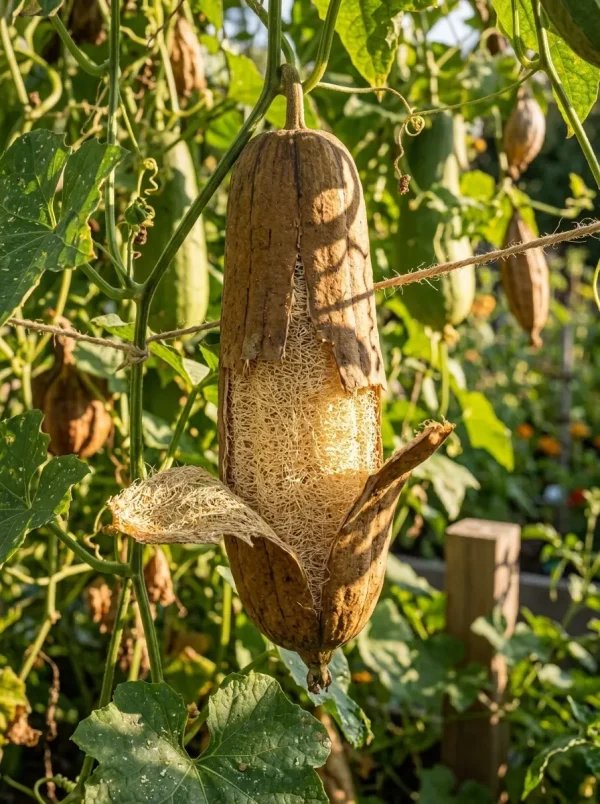
The loofah journey starts in a field. The plant grows on a sprawling vine, producing long, green fruits that look a bit like giant zucchinis.
If you were to pick one and eat it when it’s young and green, it would taste similar to a cucumber. But for cleaning purposes, we let the loofah stay on the vine until it fully matures and ripens. The green skin dries out and turns brown, and the flesh inside transforms into a tough, fibrous network.
Farmers harvest these dried gourds, peel away the outer skin, and shake out the seeds. What’s left behind is the pure, natural, highly abrasive fiber we know and love.
Why It Beats the Plastic Sponge
Why are we so obsessed with this plant? Because it outperforms synthetic sponges on every level.
<strong>1. It’s Tough, but Gentle:</strong> Loofah fibers are naturally abrasive. They can scrub away baked-on food from cast iron without scratching your non-stick pans or delicate glassware.
<strong>2. Zero Microplastics:</strong> Because it’s 100% plant-based, it never sheds synthetic microplastics into your water supply.
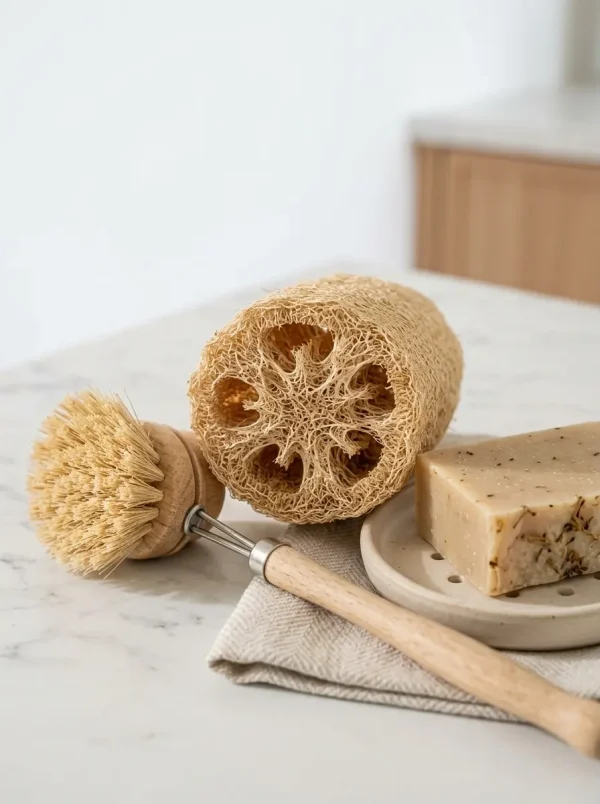
<strong>3. It Composts:</strong> When your plastic sponge gets smelly and worn out, it sits in a landfill for centuries. When your loofah sponge wears out, you simply toss it into your backyard compost bin. It returns to the soil, leaving no trace.
Caring for Your Natural Sponge
To make your loofah last as long as possible, treat it with a little care:
• After each use, squeeze out all the excess water and let it air dry.
• Every few weeks, you can sanitize it by soaking it in a mixture of white vinegar and water, or boiling it for a few minutes.
• Keep it away from harsh chemicals and bleach.
Once you make the switch, you’ll never look at a plastic sponge the same way again.